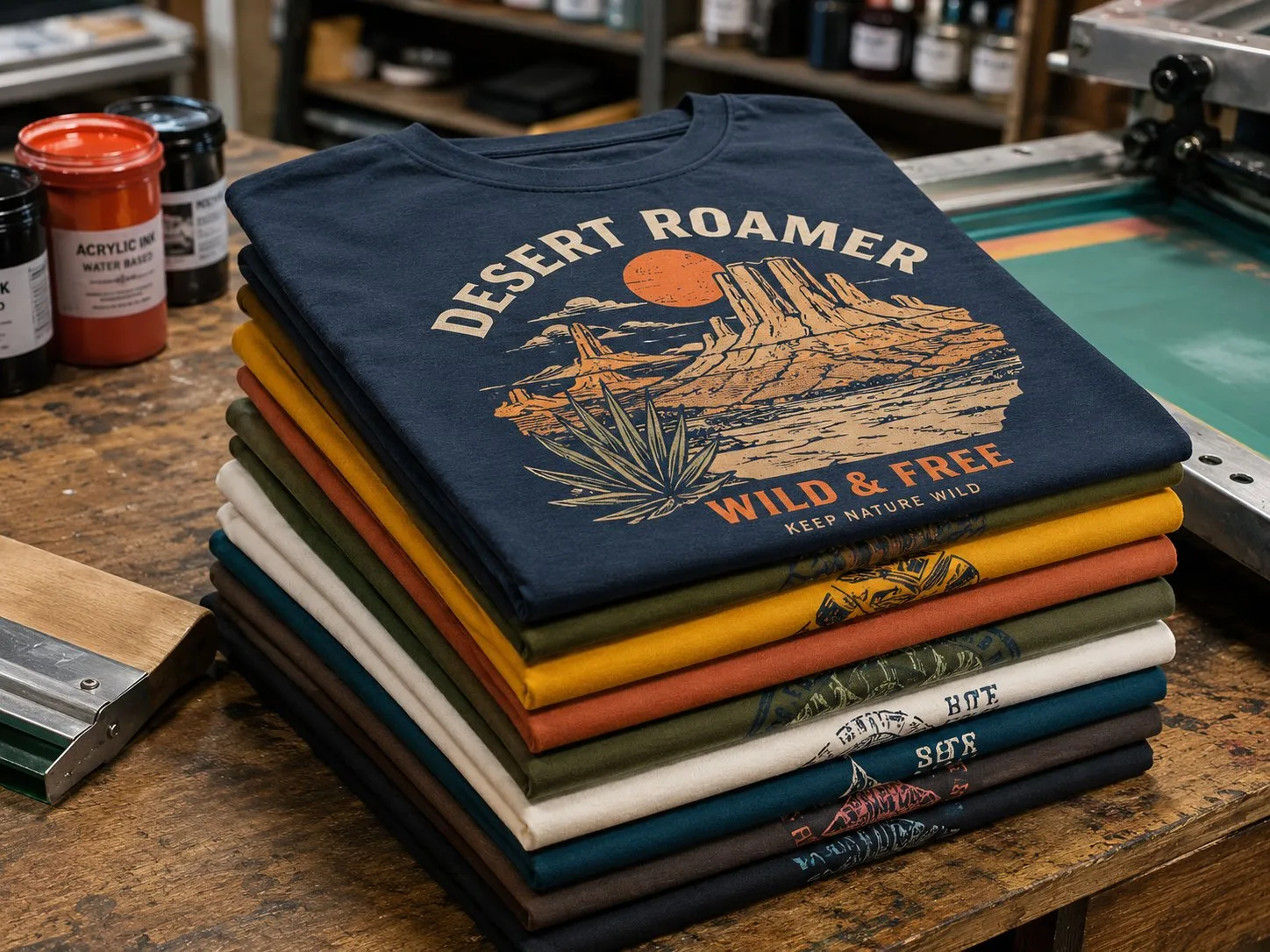
- Four levers set your per-shirt price: quantity, number of ink colors, garment choice, and print method
- Quantity is the biggest lever, setup costs spread across the run, so 48 shirts cost far less per piece than 12
- Each additional ink color adds a screen and setup time; a one-color design is the budget move that still looks sharp
- Get a real quote instead of guessing from online calculators, local shops quote your actual design on your actual garment
Why Nobody Posts a Simple Price List
The most common first question we get is "how much for custom shirts?", and the honest answer is that a real quote depends on four things. That's not a dodge. A single shirt with a 4-color front and back print is a completely different job than 100 shirts with a one-color left-chest logo, and pricing them the same would mean overcharging one customer to subsidize the other.
What we can do is show you exactly which levers move the price, so you walk into any quote, ours or anyone else's, knowing what you're looking at.
Lever 1: Quantity (The Big One)
Screen printing has fixed setup costs: burning screens, mixing ink, registering the press. Those costs are the same whether we print 12 shirts or 200, so the more shirts in the run, the thinner that setup cost is spread. That's why per-shirt pricing drops steeply as quantity climbs, with the biggest breaks typically landing at 24, 48, and 100+ pieces.
The practical takeaway: if you're close to a quantity break, it's often barely more total money to order up to it. Ask where the breaks are, a good shop will tell you.
Lever 2: Ink Colors
Every color in a screen-printed design needs its own screen and its own pass on the press. A one-color logo is one screen; a five-color design is five screens, five setups, and careful registration between them. Each color adds real cost to the run.
This is why so many of the best-looking company shirts are one-color designs. White ink on a dark shirt, or a single dark ink on a light shirt, prints crisp, lasts, and keeps the per-piece price down. If your logo has many colors, ask about a simplified one-color version for apparel, most logos have one, and we can build it for you.
Lever 3: The Garment Itself
The blank shirt is part of the price, and blanks range widely. A basic cotton tee, a soft ring-spun retail-fit tee, a tri-blend, a performance polyester, a heavyweight, each sits at a different price point, and sizes above XL typically add a small upcharge from the manufacturer.
Our advice runs opposite to instinct here: this is the last place to cheap out. The garment is what people feel, and a great print on a scratchy shirt ends up in a drawer. Moving up one garment tier usually costs less per shirt than adding one ink color, and it's the upgrade people actually notice.
Lever 4: Print Method and Locations
Method matters too. Screen printing is the value king at 12+ pieces. Heat transfer vinyl makes small runs and personalization (names, numbers) affordable at 1-11 pieces where screen printing setup wouldn't make sense. And every print location, front, back, sleeve, is priced as its own print, because it is one. A front-only design keeps things lean; adding a back print roughly adds a second run through the press.
How to Get More Shirt for the Budget
Putting the levers together, here's how we help customers stretch a budget: order to the quantity break, simplify to one or two ink colors, put the money saved into a better blank, and stick to one print location. That combination consistently produces shirts people wear voluntarily, which is the entire point of custom apparel.
The last tip is the simplest: get a real quote. Online calculators quote a generic shirt with a generic design. We quote your actual artwork on the actual garment you want, and we'll flag anything in the design that's quietly adding cost. Call (732) 272-1929 or send us the design, quotes are free and there's no pressure attached.
Related services: Custom T-Shirt Design · Screen Printing · Heat Transfer & Vinyl